What lies ahead — 01
Not a replacement. A collaborator.
Every site I build today is AI-coded, with a human touch and human design. People hear "AI" and expect a story about machines taking jobs. This is the opposite story: how working with AI as a team made my studio bigger, braver and a lot more fun.
01
Where this started
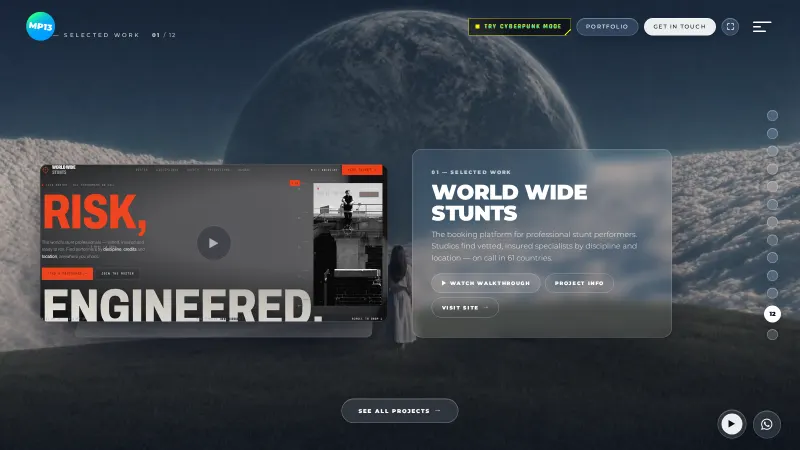
I have been designing websites since 2018. More than 300 of them, for clients on four continents: pharmacies and dental clinics, a tahini brand, a massage lounge in Sofia, a booking platform for stunt performers in 61 countries. For most of those years the job had the same shape. I designed, and then the long part began: turning the design into working code, page by page, browser by browser, phone by phone.
The long part decided what was possible. Every idea came with a quiet calculation attached. How many days will this take to build? Will the budget carry it? Is it worth the risk if the client doesn't love it? Plenty of good ideas died in that calculation. Not because they were wrong, but because they were expensive.
That calculation is what changed. Today, AI writes the code. I design, direct and decide. The ideas that used to die on the spreadsheet now get built, usually in the same week, often on the same afternoon.
02
How a working day actually looks
People imagine typing "make me a website" and getting one. That is not how it works, and it is not how I want it to work.
A working session is a conversation between a creative director and a very fast, very patient developer who never gets tired. I describe what I want, often loosely, sometimes with a reference from another site, sometimes with nothing more than a feeling. Claude, the AI I build with, proposes how to do it, writes the code and puts it live. I open the site on my phone and on my desktop, and I react.
Some reactions are long. Most are short, and honest:
- "The scroll is not working, I can't switch between screens with the mouse."
- "Revert to the smooth breathing of the menu icon, just add a glitch from time to time."
- "Switch the video on screen 11. I don't like these guys."
Each of those is a decision only I can make. Is the motion too much? Does the face read better if the phone version is cropped further to the left? Does a clip look cinematic, or does it look cheap? The AI has opinions and offers them, often good ones, but the taste is mine, and so is the responsibility.
What the AI brings is everything around those decisions: the code, the research, the explanations, the fixes, and the energy to try the fortieth variation as carefully as the first.
03
Who does what
After hundreds of hours working this way, the split is clear.
What I bring: the conversation with the client, the idea, the direction, the references, the taste, the "no, not like that", and the final word on when it is finished.
What the AI brings: the code, at a speed and scale no single person can match. Research, from stock footage to licences to search data. Options to choose from. Clear explanations when something breaks. And total patience with my changes of mind.
Neither half works without the other. AI without direction produces the average website, the one everyone else already has. A designer without the AI is back to the spreadsheet, deciding which ideas are affordable. Together, the question changes from "can we afford to build this?" to "is this the right thing to build?"
04
A facilitator, not a replacement
The best word I have found for it is facilitator. A facilitator doesn't take over the room. A facilitator makes sure the ideas in the room actually happen.
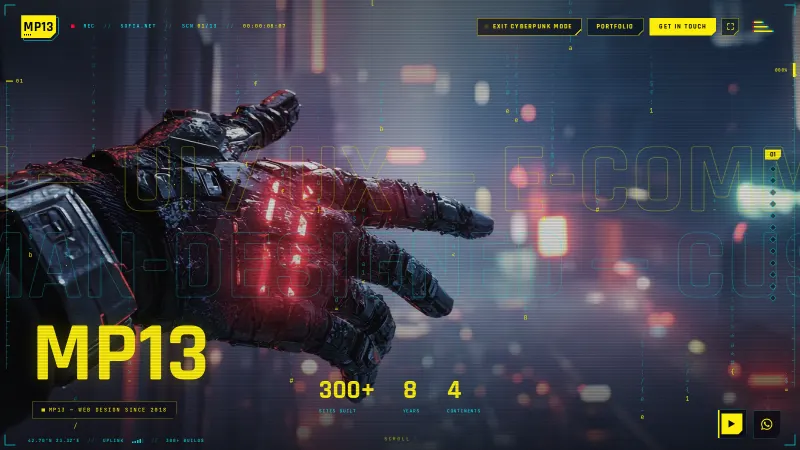
A real example. Recently I asked a single question: can we achieve the cool, immersive, very funky effect of Cyberpunk on this site? Two days later, the site had a second personality. A switchable Cyberpunk mode, with a heads-up display, glitching headlines, code rain, a full-screen pause menu, its own soundtrack and thirteen new background films, chosen one by one. Every page, desktop and phone, live.
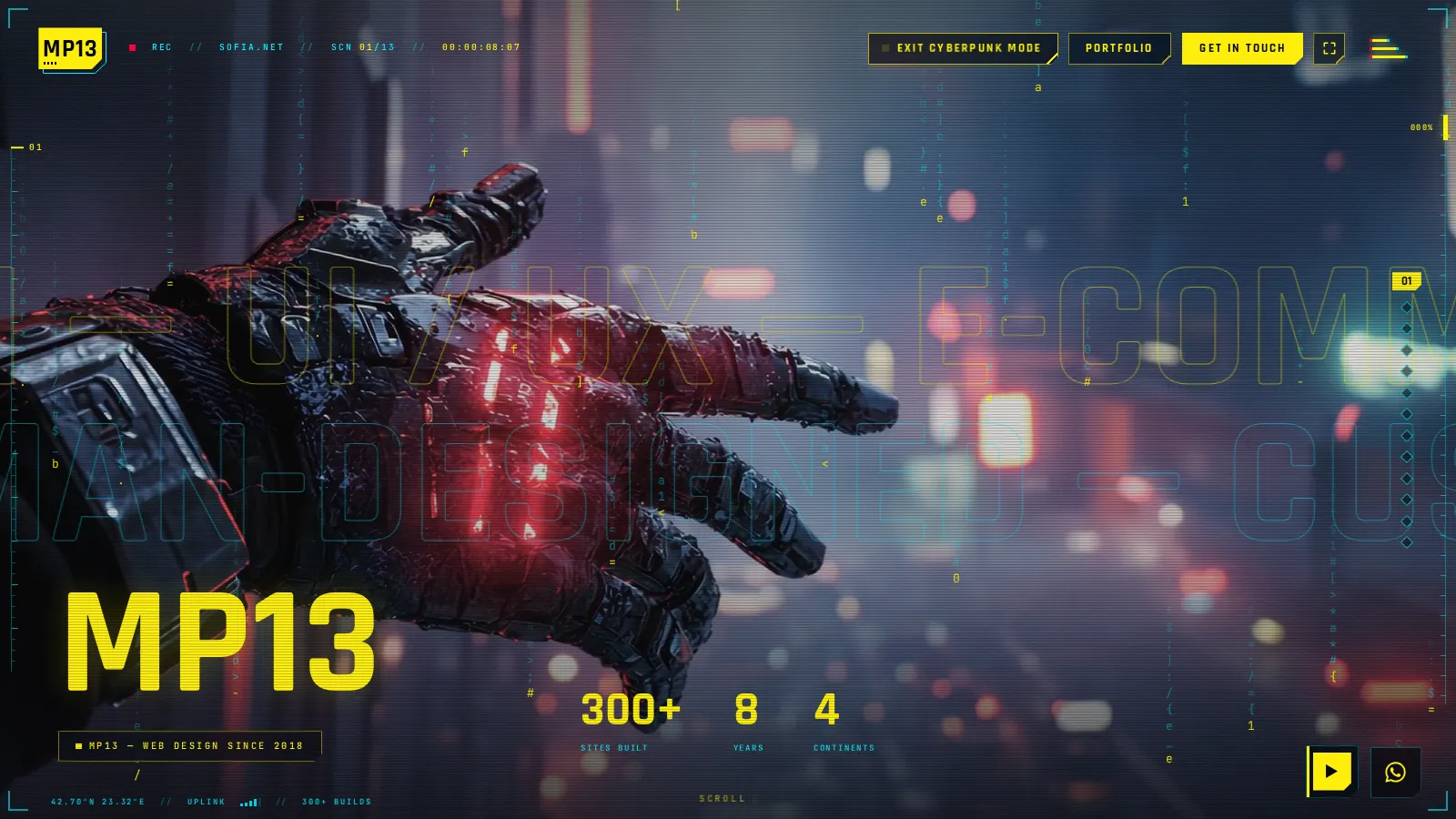
That is the kind of build that would have kept a small team busy for months: a designer, a couple of developers, someone sourcing footage and music, someone testing on devices. Here it happened between my other work, as a conversation. I have written the whole story in Cyberpunk mode: anatomy of a creativity outburst.
Did the AI design it? No. The idea came from my love for the genre and from things I had already built: the falling code on behub.dev, the camera HUD on worldwidestunts.com. The AI turned a mood into working software, and it kept asking the right questions along the way. Should the switch be public yet? Should the carousels glitch instead of turning? Where should the music come from, and is it licensed for commercial use?
05
One afternoon, start to finish
The page you are reading is a good example of how a day goes.
I asked for two things: a proper services page that explains what I do in depth, and a blog. The services page came first: nine sections, from custom web design to e-commerce to working with agencies, each linked to the projects that prove it, with a question-and-answer section at the end. It went live, and I read it on my phone in both looks of the site.
Then the blog. I gave it a name, changed my mind about the name, and settled on What lies ahead. I said what I wanted the posts to be about: how we work together, the elegant side of my work and the funky side. I laid down the ideas. The AI elaborated them into drafts, built the pages and the share images, and wired them into the menu, the sitemap and the search data.
Halfway through, I noticed something that bothered me. The site described my work as "hand-coded". It isn't, not anymore, and I'm proud of how it is made. So I said it straight: not hand-coded, AI-coded with a human touch and human design. That is the selling point. Within minutes, the wording had changed everywhere it appeared: the homepage, the services page, the portfolio, the descriptions that Google reads, even the summary written for AI assistants. A copy change like that used to mean an afternoon of hunting through files. Now it is one sentence from me and a careful sweep by the AI, which then showed me every line it touched.
That is the rhythm. I steer, it builds, I check, it corrects. Neither of us could have done the afternoon alone.
06
It goes far beyond code
The surprising part is how much of the work around a website it can carry.
Research. When the Cyberpunk mode needed footage, it searched free stock libraries, checked the licences and brought me a shortlist to judge. When I wanted music that could be used commercially instead of a YouTube embed, it found a track with the right licence and hosted it on the site.
Analytics and search. When I connected Google Analytics and Search Console, it read the data and found what I had missed: Google had never downloaded my sitemap, six of my pages were unknown to it, and the new site had been running for a month without an analytics tag. All of it was fixed the same afternoon, with a cookie banner that loads nothing from Google until a visitor agrees.
Writing. The case studies on this site, the services page, and yes, these posts, were written together. I lay down the idea and what I believe. The AI elaborates, structures and edits. Then I cut, change and argue until it sounds like me.
Explaining. When something breaks and I don't understand why, I ask, and I get a straight answer. Why did the mouse wheel stop changing screens? Because a full-screen effects layer had quietly become something the browser could scroll, and it was catching the wheel. One line fixed it. I learn something in every session.
07
What it does not do
I want to be honest about the limits, because this is where the hype goes wrong.
It doesn't know my clients. It has never stood in a kitchen showroom in Sofia or watched a stunt rig being tested. It doesn't know that people book a Pilates class on their phone late in the evening, or that a massage lounge sells calm, not treatments. Those insights come from conversations with real people, and they shape every page.
It has no taste of its own for a brand. Ask it for "a website" and you get the most likely website: a hero, three columns of features, a big button. Point it in a direction, keep saying no until it is right, and you get something nobody else has.
And it can be confidently wrong. A fix that works on desktop breaks on a phone. A clip that looks great as a thumbnail looks cheap in motion. That is why everything is checked live, on real devices, by a person.
AI-coded, with a human touch. The touch is not decoration. It is judgement.
08
Not out to take our jobs
It is the question everyone asks: will AI take our jobs?
Here is what it did to mine. It took away the part of the work that limited me and gave me more of the part I love. I design more now, not less. I try more ideas, because trying one costs an afternoon instead of a month. I say yes to projects that used to be out of reach for a small studio: custom platforms, booking systems, live data, two complete looks for the same site.
My horizons got wider, too. The Carlos Alcaraz fan site refreshes where he is playing from Wikipedia twice a day. World Wide Stunts filters a roster of performers by discipline and region. This site has two complete looks, a radio player, analytics that respect consent, and now a blog. A few years ago, each of those would have been a separate project with a separate quote. Now they are simply things we can try, and the only question is whether they are worth doing.
The bottleneck moved. It used to be "can we build this?" Now it is "what should we build?", and that is a human question. It needs someone who knows the client, the audience and the craft, and who can tell good from merely finished.
I won't pretend nothing changes. Work that consisted only of turning someone else's design into code is changing fast, and the people doing it deserve a straight answer about that. But the designers and developers who start working with AI don't sound replaced. They sound like people who were handed a bigger studio overnight. The skill now is directing it: knowing what to ask for, recognising when it is wrong, and having the taste to finish. That is creative work, and there is more of it than ever.
09
What clients get out of it
For the people I build for, the change is practical.
More ambition for the same budget. Motion, effects and custom features that used to be reserved for big-agency budgets are now realistic for a local business.
A real site, early. A first working version arrives quickly, so you react to a real site on your own phone instead of imagining one from a static mock-up.
Changes without friction. Changing your mind no longer means waiting a week. We try it, you look, we decide.
Still yours. The result is a site you own outright: the code, the content and the hosting choice. AI-written code is still code. Any developer can open it.
10
What lies ahead
I called this blog What lies ahead because I think we are at the very start of this. The tools will get faster, better and stranger. Some of what I describe here will look quaint in two years.
But I am fairly sure about one thing. The more the code takes care of itself, the more the human part matters: the conversation, the idea, the taste, and the decision to stop when it is right. AI writes the code. People decide what is worth building. Together, we build things neither would have attempted alone.
If you have an idea you thought was too big, too odd or too expensive for your website, tell me about it. It might be one conversation away.